


|
Ar kurjeru visā Latvijā
|
Tomorrow (february 3) * | From 2,99 EUR |
|
|
|||

|
Piegādes punktos
|
Tomorrow (february 3) * | From 3,39 EUR |
 Read more





| Type | Digital tester; level |
| Voltage, V | 12 — 250; 12 — 220 |
| Battery type | 3 x LR41; 3x1.5V; LR41 |
| Number of batteries in the set | 0 |
| Width, mm | 2.9 |
| Length, mm | 145 |
| LED display | Yes |
| Display type | LCD |
| LED indicators | yes |
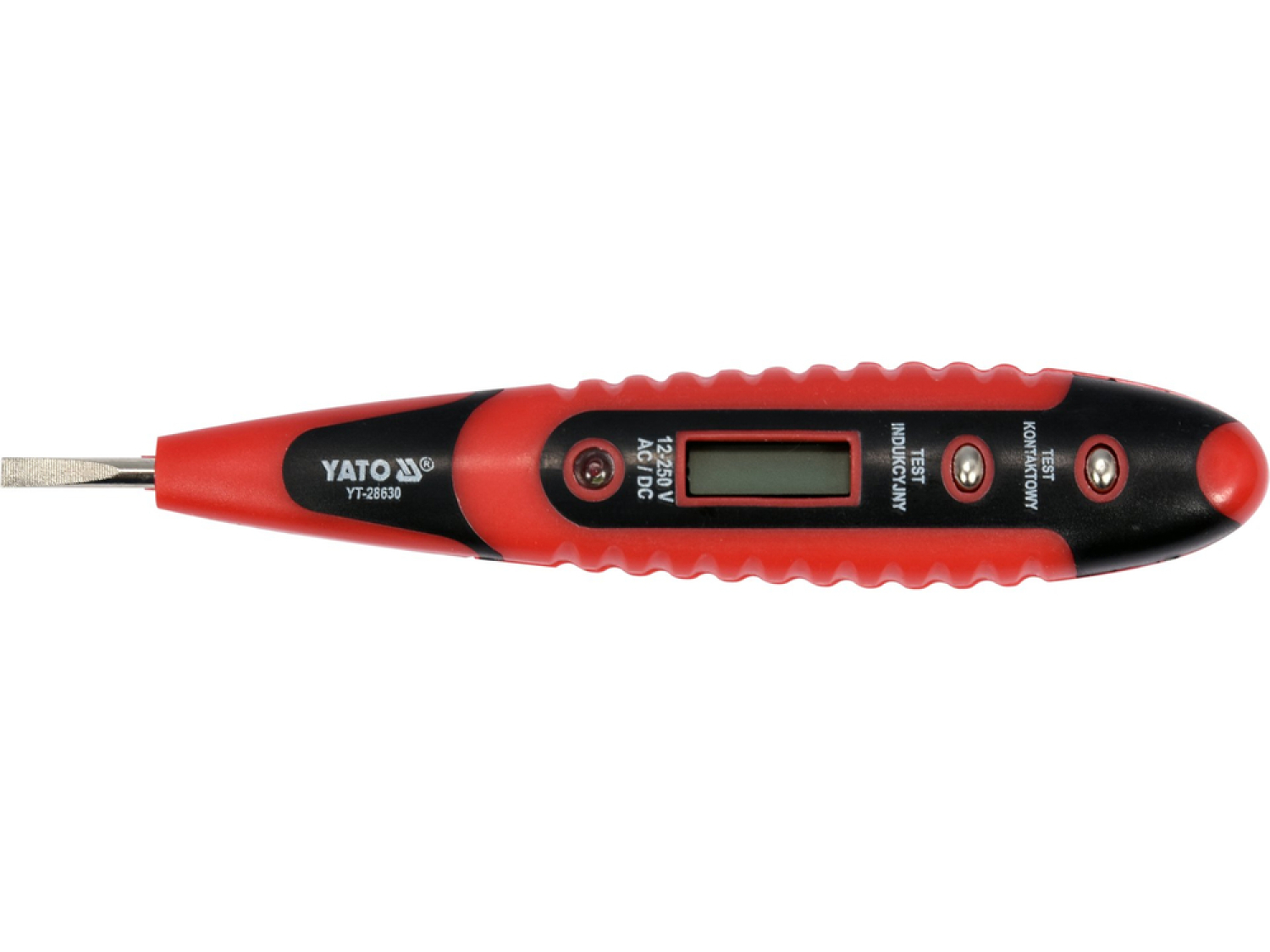
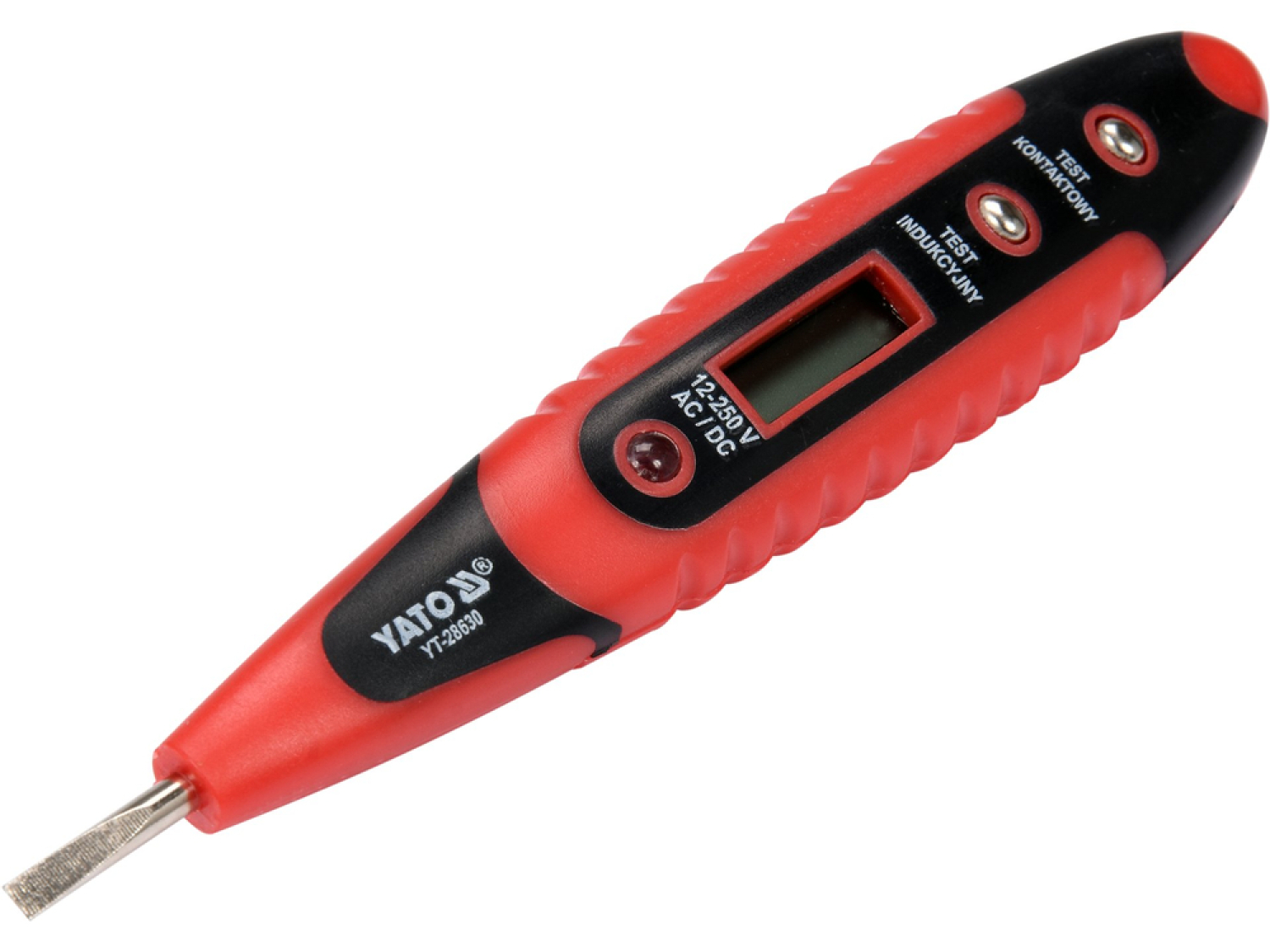
The YATO YT-28630 Digital Voltage Tester is a versatile tool designed for measuring both AC and DC voltage from 12 to 250V. This tester is equipped with an LCD display that provides clear readings, making it ideal for both professional electricians and DIY enthusiasts.
The YT-28630 electric indicator features an LCD display that detects the presence of AC and DC electrical voltage, utilizes an induction method for AC voltage detection, and conducts cable continuity tests effectively. The presence of voltage is signaled by indicators on the LCD display and an LED lighting diode. It allows contact testing for AC voltage ranging from 12 to 250V. When measuring voltage from a standard household socket (230V), the display will show the relevant indications such as [12, 36, 55, 110, 220], which means a voltage above 220V. The tester handles AC voltage correctly on the contact test setting, while it shows correct readings for DC under the induction test setting.
With the induction metering method, this tester can detect AC voltage in insulated cables. To use this feature, simply place a finger on the "induction test" area and bring the tester near the insulated cable. When voltage is present, a lightning symbol will appear on the LCD display, indicating that the circuit is live. It also detects breaks in electrical cables without direct contact: if the tester stops signaling, there is no voltage present at that point. Continuity tests can be performed by touching one end of the cable with the tester and then tapping the "contact test" area while touching the other end; a lit LED indicates continuity.
Usage warnings:
Using hand tools can be dangerous! Always wear personal protective equipment when working. Only use properly functioning tools and select the appropriate type and size based on the intended application. Avoid overloading tools and keep them away from children. Handle tools with care.